
Traditional Christmas tree colors do more than simply fill a room with festive flair, they shape the emotional tone of the holiday season itself. From the lush green of evergreen branches to the classic reds, shimmering golds, and soft whites, these familiar hues evoke feelings of nostalgia, warmth, and togetherness.
They’re part of what makes holiday decor instantly recognizable and deeply comforting, tying together memories from past celebrations with the anticipation of new ones.
In this guide, we’ll explore the origins and symbolism behind these colors, how they work together to create balanced and beautiful displays, and thoughtful ways to incorporate them into your home.
We’ll also touch on how professional support can bring consistency, quality, and ease to your holiday decorating, especially when it comes to creating cohesive, color-driven lighting and ornamentation throughout your space.
Holiday Palette Roadmap
- Roots of the Holiday Palette
- The Heart of the Tree: Green and Its Symbolism
- Bold Accents: Red and Its Cultural Meaning
- Elegant Neutrals: Gold, Silver, and White
- How Traditional Christmas Tree Colors Work Together
- Classic Strands: Understanding Traditional Christmas Tree Light Colors
- Color Schemes With a Story
- Complementary Décor Beyond the Tree
- Mistakes to Avoid in Holiday Decorating
- Why Professional Help Can Elevate Your Look
- Tips for Long‑Lasting, Picture‑Perfect Color Displays

Roots of the Holiday Palette
Long before electric lights or commercial ornament production, communities and families marked winter festivities with nature’s colors. Evergreens retained life through cold months, berries and spices brightened dark nights, and the flicker of candles gave warmth to long evenings. These early visual traditions played a significant role in shaping today’s seasonal palette.
Historians trace the modern association of red and green with Christmas back centuries to medieval Europe, where these colors appeared in religious art and winter celebrations. Over time, these hues became tied to themes of life, renewal, and shared joy meanings that continue to resonate in homes today.
As holiday traditions traveled across continents and cultures, so did the colors that represent them. Today, while contemporary palettes experiment with icy blues or minimalist schemes, the classic shades remain deeply rooted in cultural memory.
The Heart of the Tree: Green and Its Symbolism
At the center of every holiday display stands the evergreen Christmas tree, and its rich, deep green is far more than just a background color, it’s the anchor of all traditional Christmas tree colors.
Green represents everlasting life, a symbol drawn from the tree’s ability to stay vibrant even through the harshest winters. This enduring quality has made evergreens a powerful emblem of hope and renewal during the darkest part of the year.
Beyond its symbolism, green provides a natural and versatile canvas for decorating. It allows other colors like red, gold, and white to shine without clashing, offering a balanced backdrop that keeps the overall design grounded and harmonious. From a psychological standpoint, green has also been shown to promote feelings of calm and stability.
In the midst of a busy holiday season, this soothing presence can make a space feel more relaxed and welcoming. Whether you choose a real tree or an artificial one, that foundational green remains essential. It influences how all other traditional Christmas tree colors come together, setting the stage for a festive display that feels both timeless and thoughtfully curated.
Bold Accents: Red and Its Cultural Meaning
Red is one of the boldest and most recognizable colors in holiday decor. Its vibrancy instantly draws the eye and reinforces energy and warmth. But why red?
- Historic Symbolism: In many cultures, red signifies life, courage, and passion. Holiday traditions adopted it through references to festive fruits (like cranberries) and symbolic figures such as Saint Nicholas.
- Contrast and Warmth: Red accents such as ribbons, baubles, and poinsettias stand out strikingly against a green background. They add a lively counterbalance to the deeper tones of the tree.
Red’s energy pairs beautifully with more subdued neutrals like white or metallics, creating a dynamic and inviting visual rhythm.
Elegant Neutrals: Gold, Silver, and White
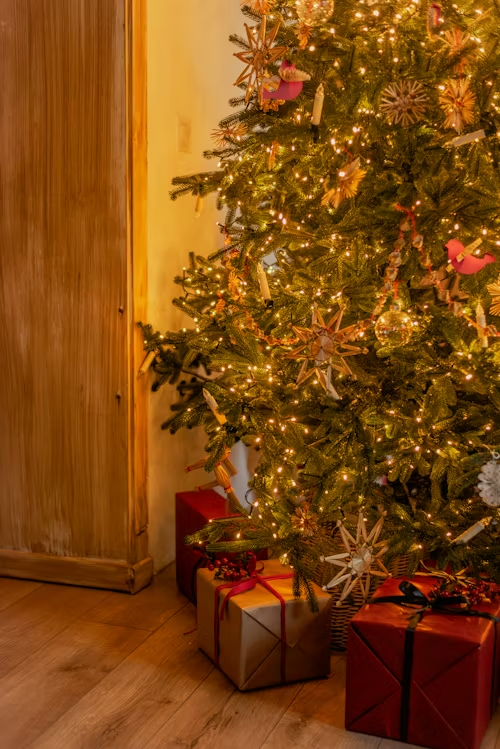
While red and green often take center stage, the beauty of traditional Christmas tree colors is fully realized when paired with elegant neutrals like gold, silver, and white. These shades bring a sense of refinement and light that complements the richness of the classic holiday palette.
Gold symbolizes warmth and celebration, casting a soft glow that echoes candlelight and pairs beautifully with deep greens and reds. It enhances the tree’s visual warmth while balancing stronger colors without overpowering them.
Silver introduces a cooler brilliance, adding reflective sparkle and understated sophistication. It blends seamlessly with both warm and cool palettes, making it a versatile choice for achieving a polished, cohesive look.
White evokes the purity of snow and winter serenity. It acts as a brightening force, lifting darker shades and offering a clean foundation for vibrant accents. Whether used in ornaments, lights, or garland, white helps unify the tree’s design with clarity and elegance. Together, these neutral elements bring depth and balance to traditional Christmas tree colors, especially when paired with classic lighting styles that reflect their brilliance and elevate the overall display.
How Traditional Christmas Tree Colors Work Together
Creating a harmonious holiday display isn’t just about picking individual colors it’s about their relationships.
Key Principles of Color Harmony
- Balance Warm and Cool Tones: Red and gold (warm) paired with white and silver (cool) create visual stability.
- Repeat Colors Thoughtfully: Repetition across ornaments, ribbons, and lights draws the eye through the tree.
- Consider Proportion: Too much of one color can dominate, aim for a balanced mix where each hue supports the whole.
Think of your palette as a symphony: green is the foundational rhythm, while accents and neutrals add melody and texture.
Classic Strands: Understanding Traditional Christmas Tree Light Colors
Lights are one of the most defining elements of any Christmas tree, and the type you choose plays a big role in setting the overall mood. When it comes to traditional Christmas tree light colors, the two most common options are warm white and classic multicolor.
Warm white lights create a soft, inviting glow that mimics the warmth of candlelight. They pair beautifully with gold, cream, and other neutral decorations, making them a perfect choice for a refined and timeless look.
This style tends to suit more elegant themes where subtlety and cohesion are key. Classic multicolor lights, on the other hand, bring a burst of holiday energy. With bold reds, greens, blues, and yellows, they offer a playful, nostalgic vibe that many associate with childhood memories and family traditions.
These strands work particularly well when paired with rich primary color ornaments and cheerful, animated decor. No matter which light style you prefer, the quality of the materials and the method of installation matter just as much.
Using commercial-grade strands and ensuring even placement across your tree helps avoid uneven lighting and tangled cords. That’s where professional installation services can be especially helpful, delivering a polished result with safe, secure wiring and consistent color application throughout the display.
Color Schemes With a Story
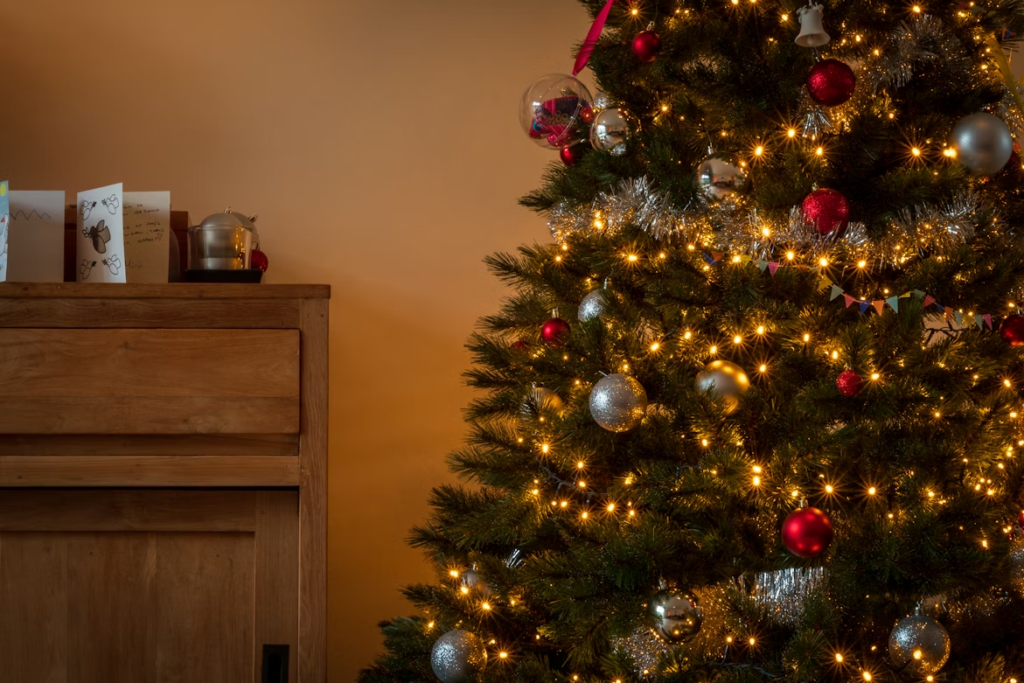
Here’s how classic colors can be organized into intentional themes that feel both traditional and personal:
Evergreen & Candlelight
- Base: Deep green branches
- Lights: Warm white
- Accents: Gold ribbons, cream ornaments
- Mood: Intimate, timeless
Classic Christmas Carnival
- Base: Green tree
- Lights: Multicolor
- Accents: Red, gold, and playful ornaments
- Mood: Joyful, festive
Silver Winter Wonderland
- Base: Green or flocked white tree
- Lights: White or cool white
- Accents: Silver, white, icy blues
- Mood: Elegant, serene
Each of these schemes leverages traditional Christmas tree colors while allowing room for creative expression.
Complementary Decor Beyond the Tree
Your tree doesn’t exist in isolation, surrounding decor enhances its impact. Consider coordinating hues through:
- Wreaths and Garlands: Match or complement the tree’s palette for cohesion
- Mantel Pieces: Use repeated accent colors to tie spaces together
- Stockings & Throws: Soft textiles can echo ornament hues and textures
- Outdoor Lighting: Color themes can carry from indoors to exteriors, unifying your display
Good color planning ensures your whole home feels intentional and warm, not haphazard.

Mistakes to Avoid in Holiday Decorating
Even when working with classic and beloved color schemes, it’s easy to make design choices that weaken the overall effect of your holiday decor. One common mistake is overcrowding, packing the tree or surrounding areas with too many ornaments, or using too many different colors at once.
This can make the display feel chaotic rather than festive. Allowing your main colors some space to stand out keeps the look clean and intentional. Another issue is inconsistent lighting. Mixing different tones of white or combining warm and cool bulbs without a plan can create visual dissonance.
Uneven light placement also disrupts the flow of the display. Investing in quality light strands or hiring professionals who know how to space and color-match effectively can make a big difference. Lastly, it’s important to avoid imbalance. Relying too heavily on a single color can throw off your theme and limit the visual depth of your setup.
Coordinating complementary shades helps ensure your design feels complete and harmonious. With a bit of planning and, when needed, a professional touch, your holiday decor can shine the way it’s meant to beautifully and memorably.
Why Professional Help Can Elevate Your Look
Many homeowners take pride in decorating their homes for the holidays, but some parts of the process benefit greatly from professional support. For one, safety is a major factor trained installers handle electrical connections properly, minimizing the risk of short circuits or fire hazards.
Beyond that, professionals are skilled in visual design, with an eye for color balance, symmetry, and spacing. This kind of aesthetic consistency is often hard to achieve without experience, especially when trying to coordinate lights, ornaments, and complementary decor. Hiring a team also saves significant time.
What starts as a fun weekend project can quickly become stressful or time-consuming. With trained crews managing the installation, you can stay focused on enjoying the season. Choosing professional services such as Christmas light installation in Brookhaven or Christmas lights installation in Atlanta isn’t just about convenience, it’s about results.
From using commercial-grade materials to ensuring even spacing and secure fixtures, the finished product reflects quality and attention to detail. Professionals also know how to weave traditional Christmas tree light colors into the broader holiday decor, creating a seamless, polished look both inside and out.
Tips for Long‑Lasting, Picture‑Perfect Color Displays
Here are practical tips to make your favorite colors shine all season:
Start With a Plan
Sketch your palette and list ornaments and lights before starting.
Group By Color
Organize decorations into bins by hue to simplify coordination.
Test Lights Before Installation
Warm and cool whites look different when illuminated; test strands in place to confirm your choice.
Create Zones of Color
Place clusters of ornaments in repeating color themes to create rhythm and flow.
By approaching your holiday decorating thoughtfully, you honor tradition while creating a space that feels uniquely yours.
Your Palette, Your Memories
Traditional Christmas tree colors are more than just a festive palette, they’re vessels of memory and meaning. From the evergreen branches to the glow of warm lights, these timeless hues connect us to cherished moments and help shape new traditions.
Whether you’re drawn to classic reds, shimmering golds, or elegant whites, knowing how to combine these colors with intention allows you to create a space that feels both nostalgic and beautifully curated.
If you’re looking to transform your home with a cohesive, professionally lit display, expert holiday lighting services can bring your vision to life with ease and style. A well‑planned display blends tradition, thoughtful design, and a bit of seasonal wonder the perfect recipe for a truly memorable holiday.