
Creating a warm and memorable holiday display at home has become a favorite tradition for many families, and the interest in DIY outdoor Christmas lights has grown as homeowners look for ways to blend creativity, cost awareness, and personal style. While do-it-yourself projects can be deeply rewarding, they also require planning and an understanding of how lighting works outdoors. This guide explores design ideas, installation tips, safety considerations, and the differences between DIY and professionally supported options in Georgia’s unique climate.
Below is a roadmap to help you navigate everything from planning to storage in a way that avoids common frustrations and supports a successful lighting season.
Guide Overview for Easy Navigation
- Understanding the Appeal of DIY Lighting
- Planning and Measuring for Effective Design
- Essential Materials and Tools to Consider
- Safety Strategies for an Outdoor Setup
- Approaches to Rooflines, Walkways, and Yard Features
- Working with Color and Style Themes
- Creative Ways to Incorporate Decor
- Differences Between DIY and Professional Support
- Keeping Your Display in Good Shape Throughout the Season
- Smart Storage and Post Season Planning
Understanding the Appeal of DIY Lighting
Many Georgia homeowners enjoy the sense of ownership that comes from crafting a personal display. Whether the inspiration comes from childhood memories or simply the joy of creating something unique, the process can be satisfying. The state’s mild early winter weather also makes outdoor work more manageable than in colder regions. Still, it is important to begin with clear goals, because DIY projects often grow more complicated than expected, especially when lights span rooflines, trees, and yard features.
For those seeking complementary decor ideas, this is also a fitting time to think about DIY outdoor Christmas decorations with lights, since they often work hand in hand with your main light layout.
Planning and Measuring for Effective Design
Good planning is usually the difference between an impressive display and a frustrating experience. Precise preparation ensures that your materials match your vision and helps eliminate extra trips to the store during a busy season.
Start with a Visual Map
Begin by taking a walk around your property at dusk. Pay attention to the natural sight lines from the street. Most homeowners want to create focal points that guide the eye in a pleasing pattern. Roof peaks, eaves, windows, gutter lines, and major landscape elements all play a role in shaping the layout.
Use a notebook or a simple digital sketching tool to record your ideas. Include measurements for each feature you plan to light. Accurate measurements help you avoid purchasing too little or too much material.
Aerial and Digital Planning Tools
Some homeowners use aerial mapping tools to get a clearer sense of length and scale, especially for properties with multiple roof sections. If you choose to use mapping tools, confirm that your measurements include any vertical changes that might affect installation. While these tools are helpful, physically measuring with a tape measure or laser tool is still the most reliable method.
Essential Materials and Tools to Consider
DIY lighting success depends on high quality materials. Lower grade lights and hardware can wear quickly during Georgia’s fluctuating winter weather, especially when rain or dramatic temperature swings enter the picture.
Light Types
There are three main categories of outdoor Christmas lights.
C9 bulbs
These are classic for rooflines. They offer strong daytime visibility and a clean nighttime appearance. They are recommended for creating outlines around the most visible architectural elements.
Mini lights
These are better for wrapping trees, columns, and railings. Their small size allows for closer spacing and more sparkle.
RGB and color changing options
Some homeowners enjoy experimenting with color changing lights for dynamic effects. They provide a modern look with remote controlled adjustments.
Extension Cords and Connectors
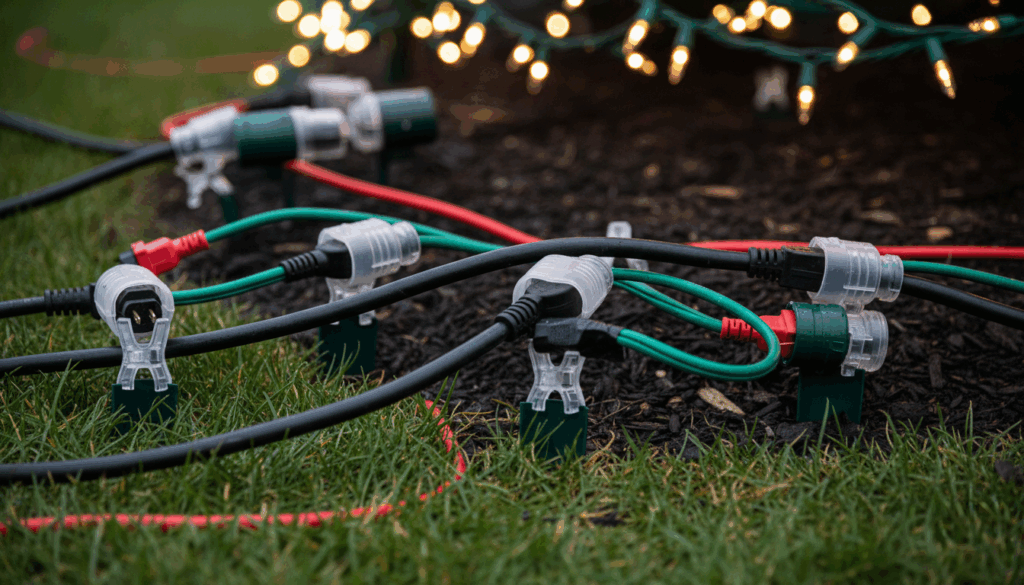
Outdoor rated cords and connectors are essential, since indoor ones cannot withstand moisture or temperature shifts. Keep all connections off the ground whenever possible, and consider using weather resistant covers for added protection.
Hanging Hardware
Roof clips, gutter clips, and shingle clips are commonly used. Choose high quality clips to avoid breakage during installation. A sturdy ladder with proper stabilizers is also important, especially for multi story homes.
Safety Strategies for an Outdoor Setup
Safety deserves careful attention during any lighting project. Improper setup can lead to electrical issues, ladder accidents, and property damage. A few simple precautions go a long way, and many of these same practices are emphasized by professionals who handle Christmas light installation in Brookhaven, since consistent safety habits help prevent avoidable on site issues.
Electrical Safety
Use only lights that are certified for outdoor use. Match the wattage of your lights to the capacity of your power source. Most homeowners do not run into issues with a single display, but problems can arise when lights are daisy-chained beyond the recommended limits. Follow the manufacturer’s guidance.
Make sure cords are not pinched by windows or doors, and avoid running cords across walkways where foot traffic could cause tripping.
Ladder and Roofline Safety
Place your ladder on flat, stable ground. Have another adult hold the ladder whenever possible. Avoid leaning too far to one side while hanging lights, since the majority of DIY accidents come from overreaching. Work slowly and take breaks if you feel fatigued.
Weather Awareness
Georgia weather can shift quickly, with instances of rain or strong wind. If a storm is approaching, stop working and resume only when surfaces are dry and steady.
Approaches to Rooflines, Walkways, and Yard Features
Each part of your property has its own lighting techniques and best practices.
Rooflines
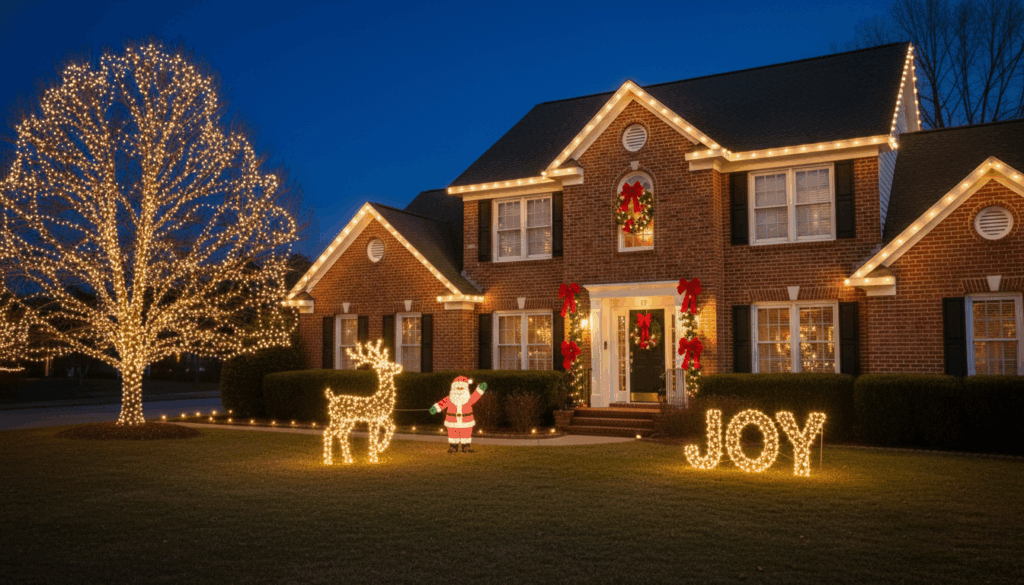
Rooflines are the core feature of many displays. When using C9 bulbs, ensure that the bulbs are oriented the same direction for a uniform look. Spacing consistency is key. If you prefer a warmer style, choose warm white bulbs. For a bright, energetic look, cool white bulbs work well.
To keep installation neat, begin at a corner and work your way around the house, following the natural breaks in the roof. Use clips that match your roof material for a secure hold.
Walkways
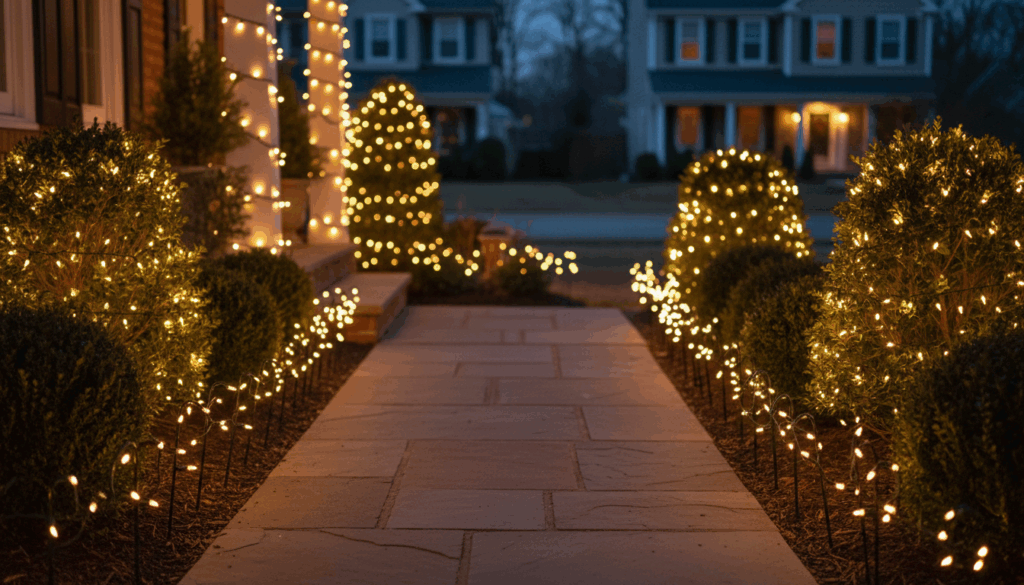
Walkway lighting creates safe navigation and festive ambiance. This area is ideal for mini lights incorporated into stakes or low shaped features. Some homeowners line the walkway with path markers. Make sure cords do not cross the walking path and place connectors where they are protected.
Trees and Bushes
Tree wrapping creates depth and variation. The technique works well for properties with a mix of tall pines and smaller ornamentals. Start wrapping at the base and move upward in even spacing. For bushes, net lights save time and deliver consistent coverage.
Architectural Accents
Arches, pillars, porch railings, and window frames offer opportunities to add dimension. When framing windows, measure each window individually, since older homes in Atlanta often have slight size variations. For porch railings, use mini lights spaced in even spirals.
Working with Color and Style Themes
A cohesive color theme ties together different elements of your display.
Traditional Warm White
Warm white lighting creates a timeless, classic feel. It pairs well with wreaths, garlands, and simple roofline outlines. Homes with brick façades often look especially inviting with warm white, since it brings out the natural tones of the brick.
Cool White and Blue Tones
Cool white and blue lights create a crisp, winter inspired look. They work well for modern homes or properties with neutral color palettes. This combination also stands out in neighborhoods where most displays lean toward warm tones.
Multicolor Approaches
Multicolor strands offer a nostalgic, cheerful style. They are popular for family centered displays and add a playful touch when used on trees and bushes.
Dynamic RGB
RGB lighting brings a more customizable experience. Homeowners can adjust tones throughout the season, shifting from warm white to multicolor or subtle pastels. While these systems take a bit more setup, they offer flexibility for those who enjoy changing their display.
Creative Ways to Incorporate decor
Lights are often the main feature, but decor elements complete the visual story.
Wreaths
A well-placed wreath serves as the centerpiece of your design. Larger wreaths above garage doors or centered on the peak of a roofline create a strong focal point. Smaller wreaths on windows offer uniformity.
Garland
Garland works beautifully around doorways and porch railings. Adding mini lights to the garland enhances its presence at night. Make sure to secure garland at several points to prevent sagging.
Yard Displays
Simple shapes such as stars, spheres, or wrapped planters add layers without overwhelming the space. When incorporating yard pieces, maintain balance. Placing too many elements close together can make the display feel cluttered.
Balancing Light and Dark
Leaving some natural darkness between lit sections creates contrast and allows key features to stand out. Think of your yard like a stage where certain spots draw attention and others support the overall look.
Differences Between DIY and Professional Support
DIY projects are rewarding, but they require time, physical work, and detailed planning. Many Georgia homeowners enjoy the process. However, others decide that the scale or complexity of their vision exceeds what they can comfortably manage within their holiday schedule.
Professionally supported installations offer advantages such as consistent measurement, high grade materials, and fast response times if issues arise. Some Atlanta based companies operate with year round teams rather than seasonal crews, which contributes to quality and reliability. For example, providers that handle Christmas light installation often use precise aerial imagery, trained teams, and organized systems that simplify scheduling and maintain consistency from year to year.
Even if you plan to install your own lights, understanding the systems used by established local providers can help you adopt better planning strategies, such as remote measurements, early season preparation, and well organized storage.
Keeping Your Display in Good Shape Throughout the Season
A well planned setup is only the first step in creating a display that lasts through the entire holiday period. Outdoor lights face shifting temperatures, occasional storms, and normal wear from daily exposure. With a little routine care, you can maintain the visual quality of your design, reduce the chance of outages, and avoid last minute frustrations during the busiest weeks of December. These small maintenance habits are especially helpful for larger displays that span rooflines, walkways, trees, and yard features.
Periodic Checks
Walk your property every few days to make sure no bulbs are out or cords have shifted. High winds can move lights out of alignment, especially on rooflines. Catching these small issues early keeps the display looking crisp.
Moisture Management
Even outdoor rated lights need a little attention during rainy weeks. Keep connectors off the ground to prevent moisture exposure.
Adapting to Weather
In unusually warm stretches, some extension cords may soften slightly, which can shift placements. In colder stretches, brittleness may occur. Inspect cords weekly to ensure stability.
Smart Storage and Post Season Planning
Good storage habits save time next year. Taking a little extra care in January results in far less frustration when the next season arrives.
Organized Takedown
Remove lights gently so the bulbs and wires remain intact. Avoid pulling clips too quickly since this can weaken the cord. As you take down each section, label it with the location it came from. This simple step makes next year’s setup significantly easier.
Coiling and Sorting
Coil lights in loose loops to avoid tangling. Use storage bags or plastic bins that protect the cords from dust and fluctuations in temperature. Keep roof clips, stakes, timers, and connectors in clearly marked containers.
Off Season Review
After storing your materials, write a short list of improvements you want to make next year. Maybe certain trees need additional wrapping or the walkway would benefit from more light coverage. Reviewing while the experience is fresh creates a smoother process next season.
Bringing It All Together
Creating a vibrant holiday display with DIY outdoor Christmas lights can be a fulfilling way to welcome the season, celebrate traditions, and personalize the exterior of your home. With a bit of planning, careful installation, attention to safety, and thoughtful storage, homeowners in Atlanta, Sandy Springs, Brookhaven, Alpharetta, and Peachtree Corners can enjoy a display that feels both inviting and unique. Whether you continue refining your do-it-yourself setup or eventually explore professional support, the important part is creating a holiday atmosphere that brings joy to your home and community.